{
“headline”: “Gandhi and Sitharaman Clash Over IDBI Bank Stake Sale: A Battle for Government Control”,
“content”:
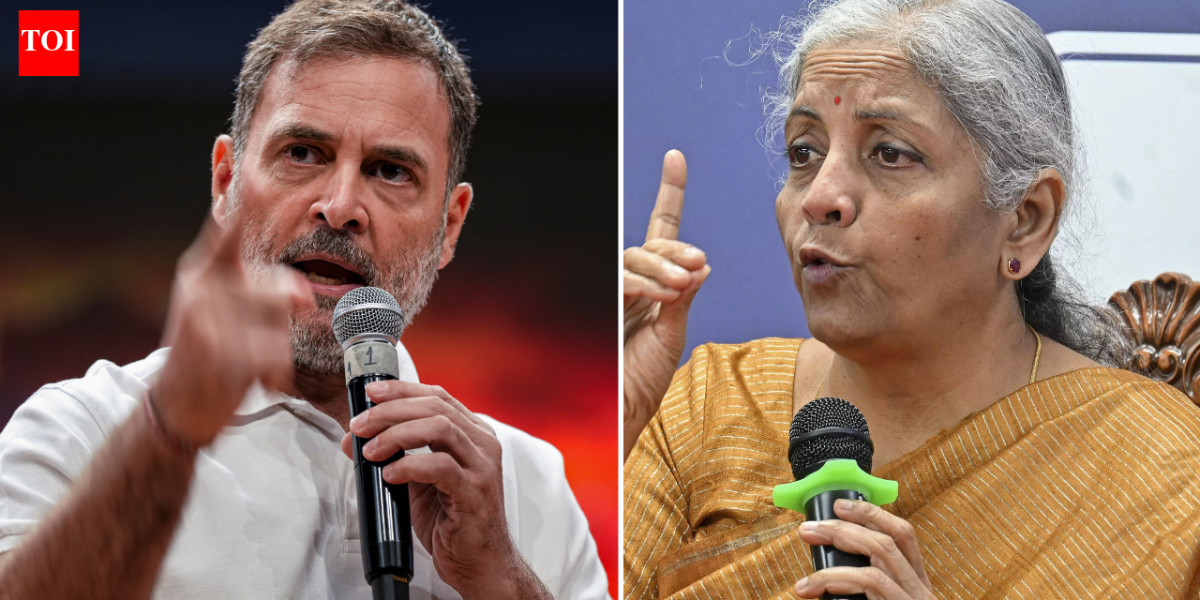
Finance Minister Nirmala Sitharaman and Congress leader Rahul Gandhi are locked in a bitter dispute over the government’s decision to sell its stake in IDBI Bank, a strategic move that could have significant implications for the Indian economy.
The Twitter spat between the two leaders began after Sitharaman announced the sale of the government’s 76.13% stake in the bank, with Gandhi accusing her of “stealing” the deal from the poor and the marginalized.
Sitharaman shot back, saying that the sale was a necessary step to ensure the financial stability of IDBI Bank and prevent its collapse, which could have had far-reaching consequences for the country’s economy.
The Background
IDBI Bank has been in the news recently due to concerns over its financial health and the potential risks it poses to the Indian banking system.
As a state-owned bank, IDBI was supposed to play a crucial role in supporting small and medium-sized enterprises (SMEs) and promoting economic growth.
The Government’s Plan
The government’s decision to sell its stake in IDBI Bank was seen as a bold move to inject much-needed capital into the bank and prevent its collapse.
Sitharaman argued that the sale would allow IDBI Bank to operate more independently and make decisions based on market forces, rather than being beholden to the government.
Opposition from Congress
Rahul Gandhi’s opposition to the stake sale was seen as a way to protect the interests of small borrowers and SMEs, who he said would be unfairly affected by the sale.
Gandhi also accused Sitharaman of using the IDBI Bank deal to settle political scores with Congress.
Implications for Investors
The stake sale has significant implications for investors in IDBI Bank, as well as for the broader Indian economy.
Analysts say that the sale could lead to a shift in market sentiment and potentially impact other state-owned banks.
However, Sitharaman defended the move, saying that it was necessary to ensure the financial stability of IDBI Bank and prevent its collapse, which could have had far-reaching consequences for the country’s economy.
Risk of Competition
Sitharaman also warned of a risk of competition from private sector banks, as they move into the space left by IDBI Bank.
She argued that this would benefit consumers and create more job opportunities in the financial services sector.
Forward Looking Implications
The government’s plan to sell its stake in IDBI Bank has raised concerns about the potential risks of competition from private sector banks.
Sitharaman defended the move, saying that it was necessary to ensure the financial stability of IDBI Bank and prevent its collapse, which could have had far-reaching consequences for the country’s economy.
Expert Analysis
Analysts say that the stake sale has significant implications for investors in IDBI Bank, as well as for the broader Indian economy.
“This is a bold move by the government to inject capital into IDBI Bank and prevent its collapse,” said Rakesh Mohan, former deputy governor of the Reserve Bank of India.
Conclusion
The dispute between Gandhi and Sitharaman over the IDBI Bank stake sale highlights the complexities of state-owned banks in India’s economy.
The government’s decision to sell its stake in IDBI Bank is seen as a necessary step to ensure the financial stability of the bank and prevent its collapse, which could have had far-reaching consequences for the country’s economy.
#IDBIBank #FinanceMinisterNirmalaSitharaman #RahulGandhi


0 Comments
Join the Conversation
Sign in to leave a comment and be part of the Pyrupay community.
Registration is free and takes less than a minute.