{
“headline”: “Microsoft CEO Satya Nadella Explains AI-Powered Buyout Offer to Boost Productivity”,
“content”:
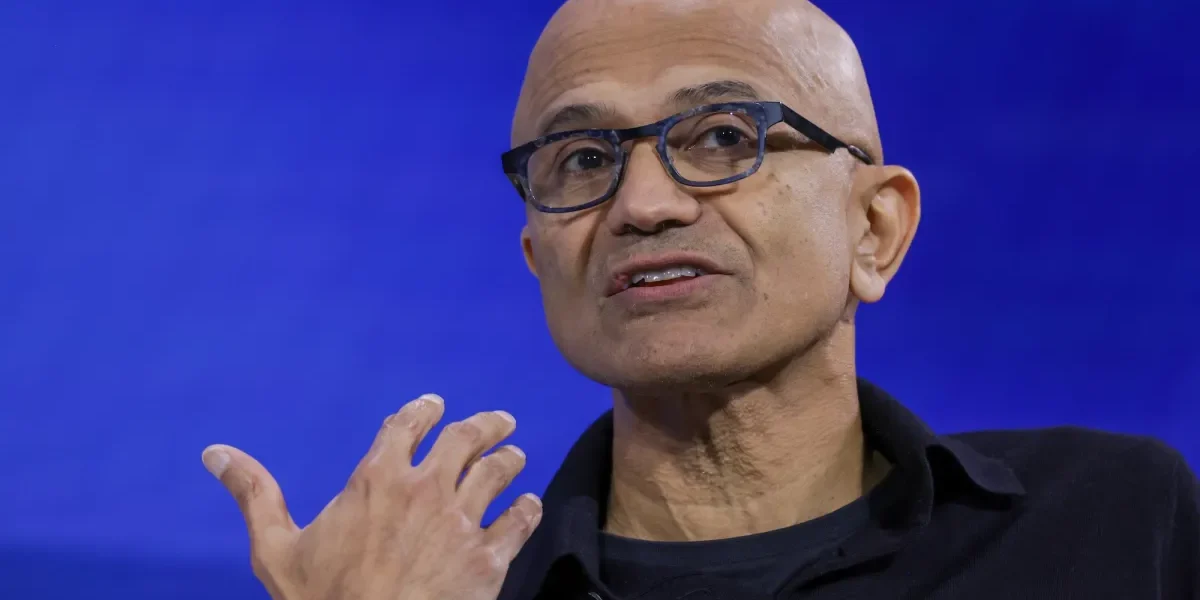
Microsoft CEO Satya Nadella has shed light on why he offered buyouts to approximately 60,000 employees in October. The move, which was seen as a way to reduce the workforce without triggering massive layoffs, was largely driven by the company’s focus on artificial intelligence (AI) and its impact on productivity.
Nadella acknowledged that AI has raised concerns among some employees, with fears that it would replace human workers in various roles. However, he emphasized that the technology is being used to augment human capabilities, not replace them.
“The question is always, ‘How will this technology change our work lives and our productivity?'” Nadella said during an interview at Microsoft’s headquarters in Redmond, Washington. “I think we’re just beginning to see how AI can help us be more productive.”
Nadella pointed to AI-powered tools such as chatbots and virtual assistants as examples of how the technology can free up human employees to focus on higher-level tasks.
“AI is not about taking jobs away from people, it’s about taking away the mundane and repetitive tasks that people don’t have time for,” he said. “We’re trying to get our developers back to work on more complex problems.”
Microsoft has been investing heavily in AI research and development, with a focus on applying the technology to various areas of its business, including customer service, sales, and marketing.
The company’s efforts have been paying off, with AI-powered tools helping to improve productivity and efficiency across the organization.
Nadella acknowledged that there will be some job displacement as a result of AI adoption, but emphasized that the benefits will far outweigh the costs. “We’re trying to create a future where everyone has the opportunity to thrive,” he said.
The buyout offer was seen as a way for Microsoft to address concerns about job security and provide employees with financial support during the transition to an AI-driven workforce.
While some critics have argued that the move is too little, too late, Nadella believes that it demonstrates the company’s commitment to supporting its employees through this period of change.
“We’re trying to be responsible stewards of our organization and make sure that everyone has a chance to thrive,” he said. “That’s what leadership is all about.”
Microsoft’s focus on AI is part of a broader trend across the technology industry, with many companies investing heavily in AI research and development.
The benefits of this investment are still being felt, but Nadella believes that it will pay off in the long run. “We’re just beginning to see how AI can help us be more productive,” he said. “And I think we’re going to be surprised at what we can accomplish.”
As the technology continues to evolve and improve, Nadella is confident that Microsoft will emerge as a leader in the field.
“We’re not just trying to keep up with the competition, we’re trying to get ahead of it,” he said. “And I think we have a good chance of doing that.”
The future of work is uncertain, but one thing is clear: AI will play an increasingly important role in shaping the world of business and beyond.
Nadella’s vision for Microsoft’s future is one of collaboration and innovation, with a focus on harnessing the power of AI to drive growth and productivity.
“We’re trying to create a future where everyone has the opportunity to thrive,” he said. “That’s what it’s all about.”
The buyout offer was seen as a way for Microsoft to address concerns about job security and provide employees with financial support during the transition to an AI-driven workforce.
While some critics have argued that the move is too little, too late, Nadella believes that it demonstrates the company’s commitment to supporting its employees through this period of change.
“We’re trying to be responsible stewards of our organization and make sure that everyone has a chance to thrive,” he said. “That’s what leadership is all about.”
Nadella’s comments come as Microsoft continues to navigate the challenges of an AI-driven workforce. The company has faced criticism for its handling of AI-related job displacement, but Nadella believes that it has taken steps in the right direction.
“We’re trying to be responsible stewards of our organization and make sure that everyone has a chance to thrive,” he said. “That’s what leadership is all about.”
The future of work is uncertain, but one thing is clear: AI will play an increasingly important role in shaping the world of business and beyond.
Nadella’s vision for Microsoft’s future is one of collaboration and innovation, with a focus on harnessing the power of AI to drive growth and productivity.
“We’re trying to create a future where everyone has the opportunity to thrive,” he said. “That’s what it’s all about.”
The buyout offer was seen as a way for Microsoft to address concerns about job security and provide employees with financial support during the transition to an AI-driven workforce.
While some critics have argued that the move is too little, too late, Nadella believes that it demonstrates the company’s commitment to supporting its employees through this period of change.
“We’re trying to be responsible stewards of our organization and make sure that everyone has a chance to thrive,” he said. “That’s what leadership is all about.”
Nadella’s comments come as Microsoft continues to navigate the challenges of an AI-driven workforce. The company has faced criticism for its handling of AI-related job displacement, but Nadella believes that it has taken steps in the right direction.
“We’re trying to create a future where everyone has the opportunity to thrive,” he said. “That’s what leadership is all about.”
The buyout offer was seen as a way for Microsoft to address concerns about job security and provide employees with financial support during the transition to an AI-driven workforce.
While some critics have argued that the move is too little, too late, Nadella believes that it demonstrates the company’s commitment to supporting its employees through this period of change.
“We’re trying to be responsible stewards of our organization and make sure that everyone has a chance to thrive,” he said. “That’s what leadership is all about.”
Nadella’s comments come as Microsoft continues to navigate the challenges of an AI-driven workforce. The company has faced criticism for its handling of AI-related job displacement, but Nadella believes that it has taken steps in the right direction.



0 Comments
Join the Conversation
Sign in to leave a comment and be part of the Pyrupay community.
Registration is free and takes less than a minute.