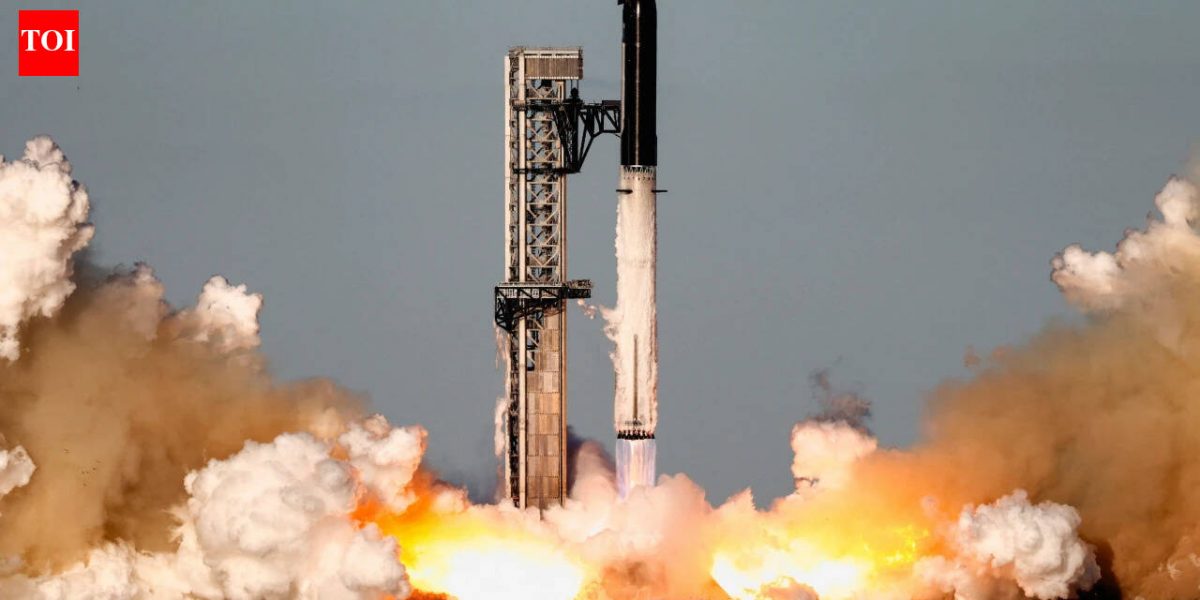
SpaceX’s latest attempt at a historic feat ended in failure on Friday, with the company’s Super Heavy rocket booster falling short of its goal to recover both stages of its Starship spacecraft during a single mission.
The incident occurred during the second uncrewed test flight of Starship, which was launched from Kennedy Space Center’s Launch Complex 39A earlier this week. As planned, the booster was expected to be recovered and reused, but it appears that the attempt at a double catch failed due to a series of technical issues.
According to sources within SpaceX, the primary issue lay with the retrorockets used to slow down the second stage, which were supposed to deploy in tandem with the main engine shutdown. However, instead of deploying simultaneously, one set of retrorockets malfunctioned, causing the booster to veer off course and land in the Gulf of Mexico.
The failure is a significant setback for SpaceX, which had been touting its reusable rocket technology as a game-changer for the space industry. While the company has faced several technical challenges during development, this latest incident highlights the risks and complexities involved in pushing the boundaries of space travel.
Despite the setback, Elon Musk, SpaceX’s CEO, remains optimistic about the future of Starship. In a statement on Twitter, he expressed his confidence in the program’s potential and vowed to learn from the failure. “We will get it right,” Musk tweeted. “It’s just a matter of time.”
As for the specific cause of the malfunction, SpaceX has declined to comment further, citing ongoing investigations into the incident. The company is expected to release more information in due course.
The Starship program represents one of the most ambitious endeavors in private space exploration. With its reusable technology and potential for rapid deployment, it could revolutionize the way humans travel through space. However, it also carries significant risks, including the possibility of catastrophic failure.
SpaceX has been working on refining its techniques and improving the reliability of its rockets. While this latest incident is a disappointment, it underscores the challenges involved in pushing the boundaries of space technology.
The failure to recover both stages of the Starship rocket during a single mission raises questions about the feasibility of reusable launch systems. As companies like SpaceX continue to push the limits of space travel, they must also be prepared for setbacks and unexpected challenges.
For now, the focus will be on analyzing what went wrong and how SpaceX can improve its recovery techniques. The company is expected to learn from this incident and apply those lessons to future test flights.



0 Comments
Join the Conversation
Sign in to leave a comment and be part of the Pyrupay community.
Registration is free and takes less than a minute.