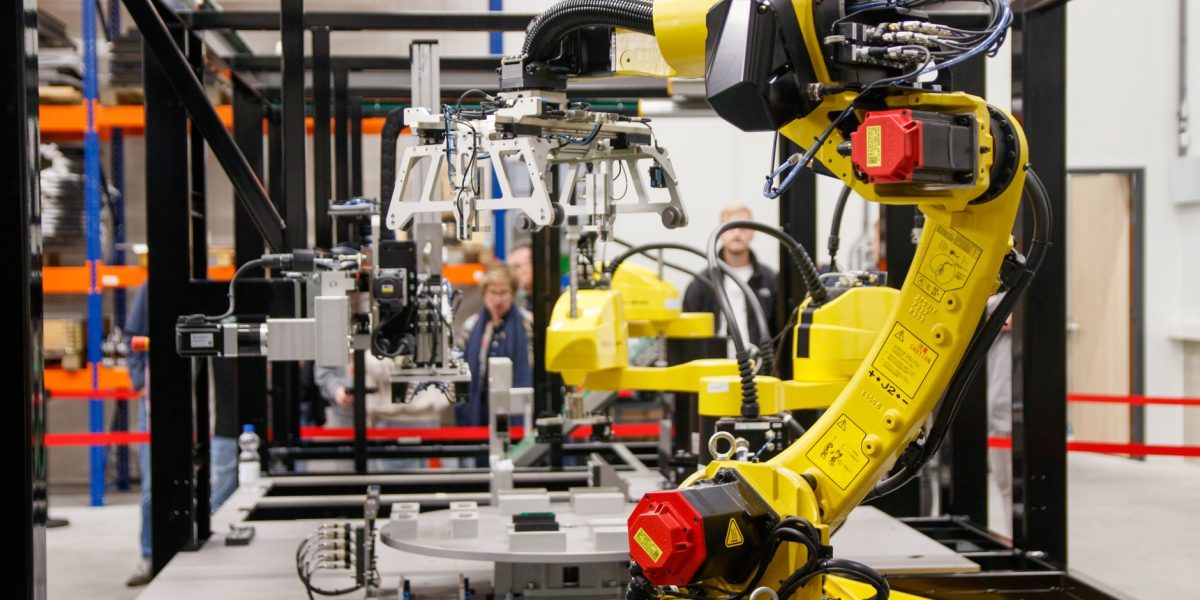
The Future of Autonomous Operations
The field of artificial intelligence (AI) has taken a significant leap forward with the emergence of ‘loopy’ systems. These AI loops enable autonomous agents to operate in a continuous, self-sustaining manner, without the need for manual intervention or downtime.
In essence, loopy systems allow multiple AI agents to work together seamlessly, forming a collective intelligence that can adapt and respond to changing environments in real-time. This enables agentic AI systems to perform tasks with unprecedented efficiency and accuracy, making them more suitable for complex, dynamic applications such as logistics, manufacturing, and healthcare.
The development of loopy systems is also driven by the need for more sustainable and reliable AI solutions. Traditional AI approaches often rely on periodic updates, retraining, or manual fine-tuning, which can be time-consuming and resource-intensive. In contrast, loopy systems can learn from their experiences, refine their performance, and improve over time without requiring external intervention.
Researchers and industry experts are hailing the emergence of loopy AI as a major breakthrough in the field, with far-reaching implications for various industries and applications. As these systems continue to evolve and mature, we can expect to see significant advancements in areas such as decision-making, problem-solving, and critical thinking.




0 Comments
Join the Conversation
Sign in to leave a comment and be part of the Pyrupay community.
Registration is free and takes less than a minute.