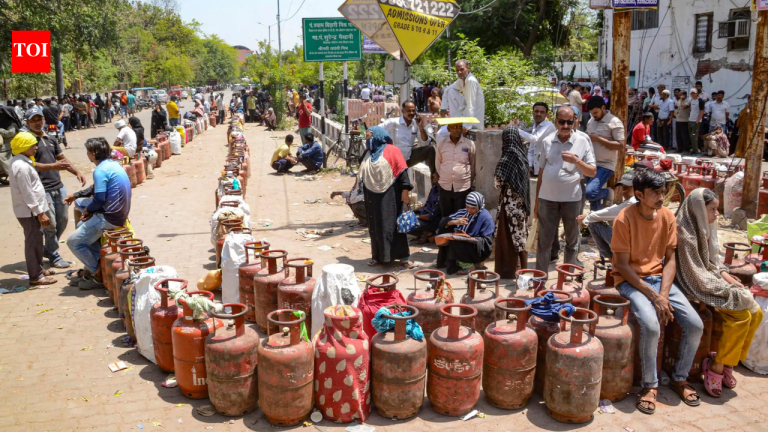
India’s restaurants are facing an unprecedented crisis due to a severe shortage of liquefied petroleum gas (LPG), which is exacerbating the impact on the industry. The situation has worsened following the Gulf War, and a government directive prioritizing domestic use has further reduced the availability of LPG for imports.
With many establishments heavily reliant on West Asia for their LPG supplies, Indian restaurants are now being forced to cut their operating hours and menus in order to cope with the shortage. The situation is becoming increasingly dire, with potential closures looming large for thousands of businesses that depend on LPG for their operations.
The impact of the LPG crisis extends beyond the industry itself, as it also affects the livelihoods of millions of people who work in restaurants and other related sectors. Many employees are facing uncertainty about their jobs, and some have already begun to feel the effects of reduced working hours or even complete closures.
Some Indian restaurants have been forced to reduce their menu offerings in order to conserve LPG supplies, which is resulting in significant losses for businesses that rely on these menus to attract customers. Others are having to limit their operating hours, which is further reducing revenue and making it difficult for them to stay afloat.
The government has acknowledged the severity of the crisis and has promised to do everything possible to alleviate the shortage. However, with no clear end in sight, many businesses and individuals remain anxious about what the future holds for India’s restaurants industry.
Experts warn that if the situation does not improve soon, thousands of jobs will be at risk, and the impact on the local economy could be severe. With millions of people relying on these businesses to make a living, it is essential that something is done quickly to address this crisis.
The Indian government has set up a task force to address the LPG shortage and its impact on the restaurant industry. The task force will work with various stakeholders to find solutions, including increasing imports and exploring alternative sources of energy.
In the meantime, Indian restaurants are doing everything they can to cope with the crisis. Many businesses are working closely with suppliers to ensure that they have a steady supply of LPG, while others are exploring alternative fuels or menu options in order to minimize their losses.
The crisis has also highlighted the vulnerability of India’s food and beverage industry to global events. The war in the Middle East has disrupted the supply chain, leading to shortages and price increases for many essential commodities.
India’s restaurant industry is an integral part of the country’s economy, employing millions of people directly or indirectly. Any disruption to this sector can have far-reaching consequences for the local economy and beyond. It is essential that something is done quickly to address this crisis and support those who are most affected.”
“
About the Author